The search for shelter

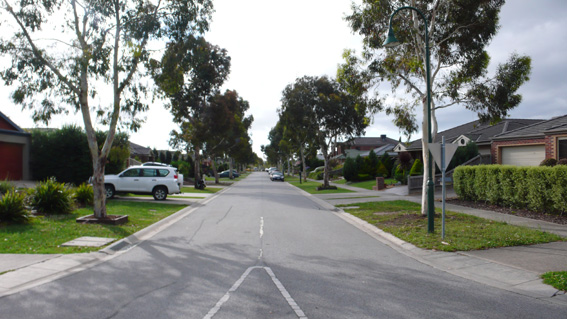
On the bicycle trip we explored ten categories of life – shelter, community, food, work, clothing, technology, money, health, spirituality and environment – but once we arrived back in our home state of Victoria we became obsessed with just one. Shelter. Where are we going to live?

And so began a four-month search for a home. When we were in Victoria’s goldfields region we visited a tiny house called the EconoSpace designed by architect Peter Cowman. Sophie fell in love with this quaint little cottage, and we had vague plans to build one on a bush block.

But being young people with very low incomes, Sophie and I are basically locked out of the Australian property market. Nevertheless, we decided to see what was available in our price range. Sophie spent many hours ogling property porn, and we quickly realised we could only afford land in rural or semi-rural Tasmania. “There are blocks near Cygnet going for $50,000,” she said, scrolling through listings on a real estate website. “Blocks of land for $8000 in Mathinna.”

Sophie and I don’t drive, and we wanted to remain committed to cycling/walking as our main form of transport. If we lived in these places, how would we get around? And since total self-sufficiency is all but impossible, we’d need to pay for things we couldn’t produce ourselves, so where would we find work?

Besides, our family and friends are in the greater Melbourne region, and we didn’t want to isolate ourselves. So although we still yearned for a little cottage in the countryside, we realised that it wasn’t practical for us at this point in our lives.

We decided to explore housing options in the Melbourne area. I’d been reading statistics about housing, and I learned that in 2010 nearly 45 per cent of Australian households had two spare bedrooms. The reason is mostly cultural: in Australia couples get married and build a three or four bedroom house, so their two kids can have a bedroom each. Then the kids move out, marry, and build a three or four bedroom house of their own. And so do their kids, and their kids, until there’s a string of empty bedrooms stretching across the suburbs.

From an environmental perspective, it makes sense to use those spare bedrooms rather than cutting down more trees to build an entirely new house. We decided to move in with my parents for the short term to see if we liked it.

My parents live on the Bellarine Peninsula, about 100 kilometres south-east of Melbourne. My dad is a keen gardener, and he helped us set up a vegie patch with winter crops (cabbage, cauliflower, broccoli, leek and silverbeet). Here it is about two and a half months after planting:

We wanted to grow these vegies without pesticides, so every few days we had to spend half an hour in the garden committing cabbage moth genocide. Those little green caterpillars are deceptively damaging – I’d neglect the plants for a few days only to discover that entire leaves had been eaten!

Although we really enjoyed living with my parents, transport was a major hassle. Sophie is a cello teacher, and every now and then she had to travel to and from Melbourne for a lesson or a gig. A return trip could take more than four hours by public transport. (By bicycle it would have taken at least a day.) Although there was a supermarket about five kilometres away, the nearest fruit shop was about 15 kilometres away. In short, the Bellarine Peninsula isn’t a very convenient place to live without a car. We decided to move back to Melbourne.

On the trip we investigated housing co-operatives, such as Murundaka in Heidelberg, which can provide long-term rental tenure for reasonably low rates (no more than 25 per cent of income, and always below the market rate). We attended an info session for Common Equity Housing Limited, where we learned that there’s a catch – you have to attend an average of two meetings a month and act as a “director” for the co-op every few years.

However, instead of dissuading us, this actually made us even more interested in co-operative housing. I like the idea of making democratic decisions as part of a community, and being a director for the co-op would help improve my business skills. So we signed up, and so far we’ve attended another info session for a co-op in Ringwood. Two members of Murundaka co-op have also offered to let us house-sit their apartment while they are away so we can get a taste of community life.

Co-op housing is a great long-term option for young people with little savings, but it could take years for a suitable vacancy to come up. In the meantime, we’ve moved into a very small apartment in Footscray. We picked up a second-hand futon on gumtree.com.au so that the main room can be both a lounge room and bedroom. Each morning we pack up the bed to turn it into a couch.

Many Australians would consider such an apartment to be unacceptably small but, after living in a tent for six months, we’re used to cramped conditions. It’s also really efficient to heat and cool a small apartment, and we’re located close to everything we need so we don’t have to travel 20 kilometres just to buy vegetables. I’m starting to think that living in an inner-city apartment could give us a lower environmental impact than setting up a homestead in the countryside. We don’t need to drive, so our day-to-day petrol use is zero.

So that’s a quick update on what’s been happening since we returned. Over the next few months I’ll be posting more interviews from the trip, an update on the progress of the book, and some thoughts on incorporating simple living into daily life.

Posted in Uncategorized |

Confessions of an ad man

At the Sustainable Living Festival in Melbourne a few weeks ago, a couple of people came up to me and asked about my background in advertising. Why did I leave? I realised I hadn’t actually explained it on this blog, so thought I’d share an essay I wrote about it last year.

Here’s an excerpt:

The chance to get paid to come up with zany ideas was what attracted me to the industry in the first place. So while my friends sat in university lecture halls learning history or philosophy, I enrolled in RMIT’s creative advertising degree and spent my years of higher education staring at jam jars and sauce bottles, trying to write taglines that captured the emotional essence of kitchen condiments. In retrospect it sounds embarrassingly superficial. But this triviality was what made it such a blast. When what you create seems completely inconsequential, you feel free to create whatever you like.In my third year, I landed a job as a copywriter at a small Melbourne agency, and I soon had a few television commercials under my belt. I looked set for a stellar career. Then, in 2008, I started writing a column about the environment for youth literary magazine Voiceworks. That’s when I realised advertising wasn’t inconsequential at all. In fact, the work I was doing had grave consequences for the health of the planet.

I became a walking contradiction, spending my weekdays writing ads promoting petrol-guzzling V8 cars and my weekends researching the dire impacts of climate change. To offset my guilt, I started writing pro bono campaigns for environment charities. In the middle of 2008, my inner conflict boiled over at an industry awards night. I slipped outside the swish function room and started crying. After that I refused to work for car companies, and at the end of the year I left my job.

You can read the full essay here. It makes two key points. The first is that in the modern age advertising’s role has been to create consumer demand by linking people’s social desires with material objects. Here’s a brief history of how this came about:

From the 1880s manufacturers grew dramatically in size, commanding larger resources and achieving unprecedented economies of scale. But what good was increased production without more customers to buy all those shiny new products? And so advertising took on its new role – to create consumer desires.

As you can imagine, advertising’s expanding influence didn’t sit well with everyone. ‘The consumer’s outlay may be diverted, by incessant advertising, from food and clothing to tobacco and Continental holidays,’ wrote the socialist English economist Sidney Webb in 1914, arguing advertising should help direct spending towards the common good.

Later, as US corporations sought to lift the country out of the Depression, admen re-imagined their role as ‘consumption engineering’, a phrase coined by the copywriter Earnest Elmo Calkins in 1930. ‘Goods fall into two classes,’ he wrote in US industry journal Printer’s Ink, ‘those we use, such as motor cars or safety razors, and those we use up, such as toothpaste or soda biscuit. Consumption engineering must see to it that we use up the kind of goods we now merely use.’

World War II intervened, and while US consumers practised patriotic thriftiness, industry expanded to supply the army. As a result, factories exited the war with ramped-up manufacturing capabilities. For a few years consumers sopped up the excess production by buying all the things that were in short supply during the war: clothing, cars and appliances. In 1946, personal consumption was 70 per cent higher than in 1941, as noted by Gary Cross, professor of history at Penn State, in his book An All-Consuming Century. Then, in the mid to late 1950s, industry began to worry that consumer demand would crash, leading to another economic depression. Writing in the Journal of Retailing, US retail analyst Victor Lebow summed up the sentiment:

Our enormously productive economy demands that we make consumption our way of life, that we convert the buying and use of goods into rituals, that we seek our spiritual satisfactions, our ego satisfactions, in consumption … We need things consumed, burned up, worn out, replaced, and discarded at an ever increasing pace.

And here’s what all this means for today’s busy ‘consumer’:

…underneath all the slogans and images flogging different products and services, the consistent and explicit message of advertising is that ‘commodities will make us happy’. But quality of life surveys show that, beyond a certain level of comfort, it is social values such as love, friendship, autonomy and self-esteem that lead to lasting contentment, not material objects. And so we have what in marketing terms is called a ‘bait and switch’. Advertising lures us with images of our non-material desires and then tells us they can be fulfilled through material goods. We purchase perfumes hoping for love, new clothes hoping for status and acceptance, the latest phone seeking a sense of connection.

The second point, and perhaps the most relevant to this blog, is that the advertising industry is very good at co-opting counter-cultural movements to sell more products, and that’s exactly what’s happening with the environment movement of today:

Most environment themed advertising is pretending to promote sustainability while actually reinforcing consumerism. Although ‘green’ products may require fewer resources or use less energy, they are still pushed onto consumers with the same breathless urgency. Yes, the products are changing, but the system remains the same, and the system is the root cause of overconsumption. We’re heading for a future where shoppers purchase an unsustainable amount of sustainable products, and ecosystems collapse despite our good intentions.

If advertising were using the symbols and language of sustainability to promote a genuinely sustainable culture, that wouldn’t be so bad. But at the moment, most advertising uses these symbols – the colour green, words like ‘eco’, concepts such as regeneration – within an underlying framework of consumerism, thus divesting the symbols of their authenticity, credibility and meaning. In the same way that advertising assimilated the countercultural movement of the 1960s, it is co-opting the green movement of the late 2000s. If this continues the movement won’t achieve the radical systemic change required, and it’ll peter out. And in 50 years when people blame advertising for everything that’s wrong with society, you know what? This time they might actually be right.

That’s why I left my job in advertising.

Posted in Our journey, Work |

Sustainable Living Festival Feb 16

I’m following up that post about grey Melbourne with an invite to see the greyness for yourself.

Sophie and I are giving a talk at the Sustainable Living Festival at Federation Square on February 16, and we’d love to see some friendly faces in the crowd.

Here’s a cropped image from the program:

Here are the full details:

Who: Greg, Soph and Dr Samuel Alexander from The Simplicity Institute
What: A talk called “Seeking the Simple Life”
When: 1pm, Saturday 16th February
Where: The “Under The Gum” tent, at Birrarung Marr (next to the Yarra River, behind Fed Square)

And here’s the spiel from the festival’s website:

“Simple living, also known as ‘voluntary simplicity’, is the paradoxical concept that you can increase your quality of life by reducing your consumption. When you say goodbye to superfluous material possessions and learn to live with less, you actually get a whole lot more out of life. In this talk, Dr Samuel Alexander from The Simplicity Institute gives an overview of the history and scope of voluntary simplicity, including findings from recent studies into the topic. Researchers Greg Foyster and Sophie Chishkovsky then explore the movement on the ground, with inspiring examples from their 5000-kilometre bicycle trip from Hobart to Cairns investigating simple living in Australia. Balancing academic research with uplifting real-life stories, this motivational talk empowers people to sidestep our unsustainable consumer culture and take back control of their lives.”

If you decide to come, please ride or catch the train!


Posted in Uncategorized |

Returning to grey Melbourne

Places have palettes, colour schemes unique to the area. I once visited Linfen, a coal mining town in central China with the worst air pollution in the world, and its palette was black: the sky was bluish black, the trees were greenish black, and the dirt was brownish black. Needless to say, it was a depressing place.

Far North Queensland’s palette is the bright green of rainforest plants and young sugar cane. Tasmania has a more muted palette of faded eucalypt. And Melbourne, I discovered as our train hurtled through the city’s industrial west, has a palette of grey.

We had decided to take the train back because it would have been too hot to ride in summer. (Considering the recent bushfires, this was the right decision.) Here’s my bike being packed away into a box:

The train journey was horrible because we had to cart these big bike boxes to and from the station when we stopped overnight in Brisbane and Sydney. After more than three days of train travel we arrived back in Melbourne to a bleak, overcast sky:

Why is Melbourne so grey? It’s not just the weather. The topography also plays a part. Other cities are turned towards a natural landmark. Sydney’s eyes are on the blue harbour and white sand beaches. Hobart glances shyly at the green bulk of Mount Wellington. Alice Springs huddles in the embrace of red mountain ranges. But Melbourne has no natural landmark to draw attention, and so the city is turned inwards, celebrating the spectacle of its own citizens: flamboyant artists, dancers and actors, colourful characters to make up for the drab surroundings. But behind them, always, is the moody grey sky.

I never picked up on the greyness before – it was like a fog you only notice once it has begun to lift. Once I saw clearly, my first reaction was sadness. I didn’t want to be in Melbourne anymore. It was a fleeting impression, of course, and my mood buoyed once I reunited with family. But still, it was a reminder that there are other, more colourful palettes out there.

Okay, so I’m probably being a little melancholy here. Melbourne ain’t so bad. Maybe I’m just in a crappy mood because for six months we were out in the sun all day, and now I’m sitting down at a desk sorting through journals for the book:So perhaps I’m low on Vitamin D. I’m sure my mood will lift soon. Anyone know a good strategy for getting over the end-of-trip blues? (Or, in my case, the end-of-trip greys?)

Posted in Our journey, Travel | Tagged , , , |

We made it!

On November 7, more than eight months and five thousand kilometres after we started our bicycle trip up Australia, we rode past the sign welcoming us to Cairns, our final destination.

image

We cruised down the main street lined with fig trees, and then parked our bikes at the esplanade.

We had actually made it! I expected a rush of exhilaration, or at least a swell of accomplishment, but when we reached our goal I felt strangely flat. It was just another day on the road.

Why the anticlimax? Perhaps because we rode from Melbourne in one long stretch, so by the time we reached Cairns we’d been in the saddle for four months. After so many hours, days and weeks of cycling, our unusual method of long distance travel had become normalised. Travelling thousands of kilometres by bicycle didn’t seem like such a big deal anymore.

As we stood on the esplanade, looking out at mangrove flats and rainforest-cloaked mountains, we heard someone yell our names.

“Greg! Sophie!”

It was Koya, the Japanese cyclist we met on the highway near Mackay! (Some readers might remember that he thought the standard treatment for snake bite was to “die”.) Not only did his $130 Kmart bike get him all the way from Surfers Paradise to Cairns – a journey of more than 1700 kilometres – but he arrived before we did!

Here’s Sophie and Koya by the esplanade.

image

We didn’t plan the rendezvous with Koya at all. Like meeting John the modern swagman and Jason the walking monk, it was another example of being in the right place at the right time.

Cairns was our final destination, but it wasn’t the end of our journey. After treating ourselves to a rest in an actual hotel (our first of the trip), we travelled to Yarrabah, a community on indigenous land to the east. In December 2011, the Federal Court of Australia recognised the Gunggandji peoples as the native title holders to more than 8000 hectares of land and water on this picturesque wedge of Coral Sea coastline. We were honoured to be their guests in this special place.

We’d been invited by Rare Earth Foundation, which had organised a Global Elders Gathering during the total solar eclipse to share the wisdom of earth-based cultures.

Volunteers had spent months setting up a village of tents by the beach, and hundreds of people attended five days of workshops, sacred ceremonies and storytelling. Along with indigenous elders from all over the country, we met tribal people and young leaders from Mexico, Japan, the Philippines, the West Indies and New Zealand.

On the morning of the eclipse, we all gathered on the beach at about 6 am. The male elders formed an inner circle with a Gunggandji man at the centre, his arms extended towards the sun. The women formed an outer circle holding hands.

As the moon slid in front of the sun, the beach grew dimmer and dimmer, until the only sunlight was a golden wedge passing across a mountain range to the south. During the moment of total eclipse, the water took on an eerie twilight glow.

image

Darkness fell, and everyone murmured and yelled in different languages. Two white-bellied sea eagles soared overhead. The Gunggandji man next to me explained that the birds were ancestors announcing their presence at this special moment.

A cloud obscured the total eclipse, so we didn’t see that classic image of a black circle inside a halo of white light. But the spooky dimness and spiritual ceremony still made the event very moving.

Of course, the Global Elders Gathering had a larger purpose: to connect with indigenous cultures so that we can restore balance to our society. Sophie and I took part in a three-day workshop on how to “change the dream of the modern world” from unthinking consumption of natural resources to conscious connection with the environment. Rare Earth Foundation recorded interviews with indigenous elders for a “digital message stick” that will explore solutions to problems facing the planet and humanity.

I’m looking forward to writing more about the insights gleaned at the gathering once I have permission from the organisers and traditional owners.

I’ll be taking a break from this blog for the next few months to focus on the book manuscript. A big thank you to all our readers, especially those kind enough to offer accommodation along the way. Your encouragement kept us going when we were feeling tired and unmotivated – or just dreading the next big hill.

Sophie and I will be back in the new year with an update on how we’ve incorporated lessons from the trip into our lives. In the meantime, I leave you with photos from the last 800 kilometres, including our ride through the World Heritage-listed Wet Tropics. Enjoy.

image

image

image

image

image

image

image

Posted in Environment, Our journey, Spirituality, Travel | Tagged , , , , , |

Jason Chan – the walking monk

After leaving Mackay, I wanted to explore simple living in spiritual traditions, especially Buddhism. But I’d left it too late. We were way behind schedule, which meant we didn’t have time to detour from the highway. Somehow, I’d have to find a genuine simple living Buddhist on a busy truck route in Far North Queensland.

I called the Buddhist chaplain at James Cook University in Townsville and asked if he knew of any Buddhists living simply and sustainably north of Mackay on the Bruce Highway. It was an absurd request, but instead of laughing at me, he asked a question.

“Have you heard of the walking monk?”
“No,” I replied.
“He walked from Gold Coast to Townsville, and now he’s walking back. You’ll probably pass him on the way up. Ask at truck stops and towns if they’ve seen a barefoot monk carrying a begging bowl.”

So it turned out that a Buddhist monk was walking towards us, and that our paths were destined to cross. I didn’t plan this at all. It was a magical coincidence, the sort of seredipity that sometimes blesses epic journeys.

The next day I asked around, and learned that he’d left Townsville a few weeks earlier. I also did some internet research and found articles about him in local newspapers. He was definitely in the area, but where?

I’d heard a rumour that he slept under bridges, so as we approached the coastal town of Bowen, I stopped at a large bridge and peered underneath. Nothing. I kept scanning the side of the road but couldn’t see him anywhere. I was about to give up when I spotted a man in red robes sitting cross-legged under a tree by the side of the highway. Sophie and I approached slowly, and he motioned for us to sit with him.

He was Asian in appearance, his thin body wrapped in red robes. He said his Buddhist name was Jinasiri, but he preferred to use his real name, Jason Chan. He was 31 years old and was born in Australia. He studied law at Sydney University and worked a variety of jobs (including three months in a law firm) before joining Santi Forest Monastery in Bundanoon, New South Wales. In 2010 he went to Sri Lanka and spent about a year at Na Uyana Monastery.

But the more he studied, the more he realised that the lives of modern monks weren’t in keeping with the Buddha’s teachings in the Pali canon, the doctrinal foundation of Theravada Buddhism. “The way the Buddha lived and taught his monks to live was to be homeless,” he explained.

And so, since returning from Sri Lanka in August 2011, Jason had been recreating the historically accurate lifestyle of a Buddhist monk. “I wanted to see if it was possible to live the old way with just three robes and a bowl in Australia. I thought if I could walk from Gold Coast to Townsville, I could prove you could do it.”

He arrived in Townsville in May 2012, spent a few months on Magnetic Island, and when we met him he was walking back south to Sydney.

He lived by strict rules. He was only allowed to eat one meal a day before 12 pm. The food had to be given to him. He couldn’t even pick up an apple that had fallen on the ground, and he wasn’t allowed to hoard food either. “I have to wake up each morning with nothing.”

Despite these strict rules, he had never missed a meal. Drivers pulled over on the busy Bruce Highway to hand him food. When we offered him something to eat he said he already had more than enough for the day.

At night he slept on bare earth, with only a woollen blanket for warmth. He didn’t even have a sleeping matt. “If you sleep against hard things the body gets soft and flexible,” he said. “If you sleep against soft things, the body gets hard and rigid.”

“We have as much ability to adapt to the environment as animals. But what we do is adapt our environment so we don’t have to adapt our bodies.” After learning to adapt, he said, “the body becomes its own palace”.

His feet proved the point. He had no shoes, and his soles were as black and calloused as a dog’s paws. While we spoke, several ants crawled across the bottom of his right foot. He didn’t flinch.

He was probably the most articulate person I have ever met. His sentences were succinct and uncluttered. “Advertisers are in the business of turning wants into needs,” he told me. I once wrote an essay on that topic, and it took me 4000 words to say essentially the same thing.

We talked about sustainability, simple living, and the contentment that comes from renouncing material possessions. It was the most profound and revealing interview of our entire trip. I’ll be including his full responses on these topics in the book.

As our discussion wound up, I asked to take a photo, but Jason declined. He wanted to spread his message through meaningful face-to-face encounters, and he was worried about attracting the wrong kind of fame. “Gushing excited attention is poison to wisdom,” he said. (Despite this, I later discovered a Facebook account in his name.)

So we left him there, sitting cross-legged under a tree by the highway. Before departing, I asked what he would do after reaching Sydney. “The Buddha walked till the day he died,” he said.

Posted in Our journey, Spirituality | Tagged , , , , |

Cycling in Queensland – beware of bullshit

We were told the ride up north Queensland would be tough. People warned us of baking hot days, humid nights, lurking crocodiles and endless stretches between towns.

We discovered it was all a load of crap.

On the advice of a bike store worker in Gympie, we took the inland route to Rockhampton along the Burnett Highway. It added 80 kilometres to the trip, but it was worth the extra pedalling.

This was classic Aussie bush: arid grasslands, twisted gum trees, vast blue skies and remote towns with grand Queenslander-style pubs.

image

It was burning-off season, so we cycled past blazing paddocks.

image

We also enjoyed glorious sunsets.

image

And saw some lovely views of open country.

image

We’re used to doing 50-80 kilometres a day, but for this stretch we managed more than 100 kilometres a day. We woke up at 5 am to the sound of rainbow lorikeets screeching in the gum trees, had breakfast, then hit the road for five hours. During the hottest part of the day we slept on the grass at roadside rest stops.

image

At about 3:30pm we’d get up and cycle another three hours to a safe camping spot.

We were told that the 330-kilometre stretch from Rockhampton to Mackay would be the worst of the whole trip. “Forget about it!” an old truckie grumbled. “There’s nothing out there.” It was 30 degrees at night, he reckoned, and during the day the temperature was so hot “milk will curdle in your stomach”.

Again, what a load of crap. There were rest stops or petrol stations every 80 kilometres, and the temperature was cool enough at night to create morning fog.

image

It wasn’t any hotter than other parts of north Queensland. Our only issue was a series of punctures on Sophie’s back wheel, but she did some roadside repairs and we were good to go.

image

Aside from the early starts, it was a pleasant ride. We stopped at a lovely beach town called Clairview for a well-deserved rest. Contrary to the advice that there was “nothing out there”, we found a produce stall selling corn for 40c a cob, small pumpkins for $1.20, and tomatoes for $2 a kilo.

image

We also met a Japanese cyclist named Koya.

image

Koya’s journey is testament to the fact that cycling north Queensland isn’t impossible. He rode from Surfers Paradise to Mackay in 12 days on a bike he bought from Kmart for $130. He was so ignorant of bicycle mechanics that he didn’t even know how to tighten his brakes. And whereas we had capacity to carry about 10 litres of water between rest stops, Koya had two 750ml bottles of water he picked up from petrol stations.

He was hilariously unprepared for bush survival.
“Do you know what to do if you get bitten by a snake?” I asked him.
“Die?” he replied.
“No, you don’t have to die,” I said, stifling a laugh. “You can put on a pressure bandage and call an ambulance.”
“Oh,” he said.

So now we’re in Mackay, looking forward to the rest of the ride to Cairns. I’m sure someone will tell us that you can’t cycle north due to heat/hills/highway hobgoblins, but this time we know to take the advice with a grain of salt.

In fact, there’s really only one obstacle to riding through north Queensland. Bullshit. Cyclists, beware.

Posted in Environment, Our journey, Travel | Tagged , , , , , , |

The final stretch

Australia’s vastness is humbling. Just when you think you’ve made some headway along the coastline of the great southern continent, you look at a map and realise the insignificance of your achievement.

Even worse, a local reminds you.

Yesterday I told a woman on the Sunshine Coast, just north of Brisbane, that Sophie and I had cycled all the way from Hobart, and we were heading for Cairns. “You’re halfway there,” she said.

It was a sobering reminder of Australia’s gob-smacking size. Like most Australians, I’ve spent my life huddled in the relative coolness of the south-east coast. From that vantage point, it’s easy to think the road north ends at Brisbane. Not so, my fellow southerners. Brisbane is only the halfway point between Melbourne and Cairns. And once you get past the Queensland capital, it’s a hard slog all the way to the top.

Actually, for Sophie and me, Brisbane was more than halfway. We’ve taken the most indirect and inefficient route up Australia you can imagine. First we went south in order to go north. Then we went west before heading east. We did all the things travellers aren’t supposed to do when they visit Australia: we went to Canberra in winter (with overnight temperatures of minus five), we cycled through the dry – and boring – New South Wales plains, and we hardly spent any time on the beach.

But our zigzagging route did have one benefit. It allowed us to see a wide variety of landscapes, and meet a diverse group of people: a forest activist living up a tree, a lawyer who became a shearer, a tiny house architect, permaculture co-founder David Holmgren, a sociologist who started an intentional community, a couple moving to a Cambodian slum, a slow food chef, author Clive Hamilton, Costa from Gardening Australia, a slow fashion designer, an historical trekker and survivalist, a modern swagman, blogger and author Rhonda Hetzel…and those are just some of the people we could include on the blog. The rest will be featured in the book.

Anyway, because of this roundabout route, we actually cycled over 4000 kilometres to Brisbane, rather than the usual 2000. So Brisbane was more than two-thirds of the way through our journey. But we can’t pat ourselves on the backs just yet. The hardest part is still to come.

We’ve been invited to attend a gathering of elders on Indigenous land east of Cairns during the solar eclipse. It will be a great privilege, and the best possible way to cap off our exploration of simple living. Problem is, the event starts November 10, giving us only a month to cycle 1700 kilometres.

That’s an average of about 55 kilometres a day, which wouldn’t be too strenuous under normal conditions. But we’ll be cycling through Far North Queensland as the weather heats up. The temperature is already hovering around 30 degrees during the day, and humidity is building for the wet season.

“Wrong time of the year to be travelling north,” a local reminded me the other day.

In fact, quite a few locals have told us we won’t make it. The odds are certainly against us. We’ll have to take the Bruce Highway, a notoriously busy truck route, still undergoing roadworks after the Queensland floods. We’ll face hot and humid days, so we’ll need to start cycling when the sun rises – about 4am in these parts. It’s 300 kilometres or more between towns in some stretches, so we’ll need to carry a lot of food and water – and if we can’t get the water from petrol stations or road houses, we’ll have to scoop it out of crocodile-infested creeks. Oh yeah, and then there’s the small issue of torrential rain as the wet season approaches. Did I mention camping among poisonous snakes too?

I won’t have much access to power or internet over the next few weeks, so I’m going to take a short break from blogging until we’re through the worst of it. Wish us luck. We’ll need it.

Posted in Our journey, Travel | Tagged , , , |

Rhonda Hetzel’s homespun wisdom

Cycling up the little driveway in Landsborough, I felt as if I were reuniting with a long lost friend. I had read Rhonda’s book Down to Earth while cycling through Tasmania. It was one of those books that gave me a warm fuzzy feeling and I felt as if Rhonda were speaking directly to me over tea and cookies.

We were warmly welcomed by Hanno and Rhonda who came out to greet us. Early conversation was calm and polite, and I had to remind myself “Oh yeah, Greg and I are complete strangers to this couple”. From reading Rhonda’s book, a direct window into her life, I felt as if I knew her but, of course, she didn’t know me.
image

Later that evening over dinner, this issue arose as Rhonda highlighted some of the hardships of her newfound fame. She described a particular media shoot held at her home where the stylists, photographers, etc plainly stated that they felt like they’d “been here before”. And that’s how I felt too. For instance, I saw the home-knitted cotton cloths she described how to make in her book, along with many other things that gave me a sense of deja vu. Rhonda admitted she had concerns for her privacy, which she didn’t foresee before publishing her book.

We did the formal interview the next morning, discussing the blog in particular. As well as being a permanent, detailed record for her family, Rhonda said that one of the true enjoyments of the blog is being able to pass on information from an “elder” to younger people, a practice she felt is becoming lost in our current society. And that practice was certainly revealed as the interview progressed.

Rhonda had some wonderful advice for Greg who, like her, had worked in a job that didn’t align with his values and ethics. “I don’t think you should feel guilty for doing a job you probably did quite well, and you were earning your keep, which is what all of us are supposed to do in our society,” she said. Greg had worked in advertising, then left the industry to pursue environmental journalism. “It probably did you a favour, it pushed you in that direction.”

She further went on to say “I think you should feel guilty if you thought those things and didn’t make the change”. I agree on many levels that it is no use lamenting about the past. Learn from it instead.

What I took away from our meeting was accepting that people will always criticise you for what you do and the decisions you make. “You have to be comfortable with your choices,” Rhonda explained when I asked her how she reacted to harsh criticisms from others. “If I weren’t 100 per cent sure of what I was doing, I would think maybe they have a point.” I hadn’t thought about it in this way. There will always be arguments and conflicts in the world, however it is the way we deal with them that determines whether we progress.
image

Posted in Our journey, Profiles, Shelter, Technology, Uncategorized | Tagged , , , , , , |

Meeting a modern swagman

You might remember an ABC documentary in 2004 about a “modern swagman” named Grant “John” Cadoret.

It was a cracking yarn. In 1977, at the age of 22, John left his job at a Melbourne bank for a three month road trip, never to return.

He spent the next 25 years walking Australia’s highways, living off what he could find by the side of the road. He ate discarded food, picked up coins to buy canned beans and noodles, drank from creeks, and slept in the bushes without a tent or fire. The whole time he’d never been on the dole or visited a doctor, so he was practically untraceable.

Meanwhile, his family had filed a missing persons report, and hadn’t heard from him in decades. Then a writer bumped into John on the road, tracked down his parents and reunited the family. You can read the full transcript here.

Sophie and I had both watched this documentary so we knew John’s story. Imagine our surprise when we cycled along the New England highway in northern New South Wales and saw this character shuffling along the opposite side of the road.

image

image

“How long have you been on the road?” I yelled out from my bike.
“Thirty odd years,” he replied. “I go back and forth between Victoria and Queensland.”

It was him!

We sat by the side of the road for an hour, asking John questions about his travels. He was so calm and relaxed. Nothing seemed to phase him. He lived in the moment and, despite all he had given up (or perhaps because of it), he was completely at peace. I felt like I was talking to a devout Buddhist, someone who’d accepted the transient nature of existence. I’d almost call him enlightened.

image

It’s amazing what you can find by the side of the road. John the swagman, it seems, found contentment.

Posted in Our journey, Profiles, Travel | Tagged , , , , |